Showing posts with label The Daily Beast. Show all posts

Tuesday, May 31, 2011

Is Pakistan Killing Journos?

Syed Saleem Shahzad in 2006. (Banaras Khan, AFP / Getty Images)

Who Killed Saleem Shahzad?

An investigation by Newsweek's Ron Moreau, Fasih Ahmed, and Marvi Sirmed, of Baaghi blog

Courageous Pakistani journalist Syed Saleem Shahzad, who had scored major scoops on al Qaeda and the Taliban, was abducted and brutally murdered this week. Was the ISI, the country’s shady intelligence agency, to blame? Ron Moreau, Fasih Ahmed, and Marvi Sirmed report on the ISI’s history of intimidation—and why Shahzad’s death may have been a bloody warning to scare off their critics in the media.

About 6 p.m. on Sunday, Syed Saleem Shahzad left his house in Islamabad for the short drive to a Pakistani television station where he was scheduled to appear on a political talk show. The hard-hitting investigative journalist never got there. Instead, he disappeared—picked up by Pakistani intelligence, it's widely believed. Human Rights Watch's country representative in Pakistan, Ali Dayan Hasan, tells The Daily Beast he "put out feelers" when he heard that Shahzad had gone missing and was led to believe "through unspecified but credible sources" that Shahzad was in the custody of agents from Pakistan's powerful Inter-Services Intelligence Directorate. Dayan says his understanding was that Shahzad would be home by Monday night. He adds that Shahzad's family was given the same assurances. Shahzad's wife reportedly got an anonymous phone call on Monday saying her husband would be home in the next 24 hours.

It was not to be. On Tuesday Shahzad's abandoned car and his wristwatch were found about 100 kilometers from Islamabad. His dead body was discovered in a canal several kilometers from that spot. He had been shot in the stomach, and there were marks of torture on his face and body. Shahzad, 40, was the latest Pakistani journalist to die under mysterious circumstances. Since 2010, 15 Pakistani journalists have been killed, making Pakistan one of the world's most dangerous countries for the profession, according to Reporters Without Borders.

Shahzad, a father of three, covered a particularly dangerous beat—and landed stories that no one else had. In 2008 he interviewed the bloodthirsty Pakistani Taliban leader Baitullah Mehsud, who would be killed in a drone strike the following year. And two years ago he scored an interview with Ilyas Kashmiri, the al Qaeda-affiliated jihadist believed to have masterminded the 2008 terrorist rampage that left more than 160 dead in Mumbai. Shahzad's latest book, Inside al Qaeda and the Taliban: Beyond bin Laden and 9/11, has just been published, and only two days before his disappearance he posted a story on Asia Times Online about the deadly May 22 attack on Karachi's Mehran naval air station. "Al Qaeda carried out the brazen attack on the PNS Mehran naval air station in Karachi on May 22 after talks failed between the navy and al Qaeda over the release of naval officials arrested on suspicion of al Qaeda links, an Asia Times Online investigation reveals," Shahzad wrote.

“We don’t know if the ISI killed him,” Dayan says, “but the manner of his killing is consistent with the other murders where there has been credible evidence of ISI involvement.”

Pakistan's TV news outlets, known more for their passion than for accuracy, have all but accused the ISI of Shahzad's abduction and death. The ISI and other Pakistani intelligence entities have a history of intimidating—and sometimes abducting—outspoken, unruly, and uncooperative reporters and politicians. Umar Cheema, a first-rate reporter for one of the country's largest English-language dailies, The News, published some articles critical of Pakistan's armed forces and got a warning from the ISI. "They approached me," he tells The Daily Beast. "They said what they wanted to say, and in a nice manner. Going by what I'd heard, I feared they wouldn't be so nice in future—that the next message would be a harsher one."

Cheema was driving home from dinner in Islamabad last Sept. 4 when a group of men in black commando-style shirts stopped his car, blindfolded him, and took him to a house where he was stripped, beaten, and videotaped in humiliating positions. He believes they were ISI. "They continue to deny it, but I'm convinced it was them," he says. Nevertheless, he says, it's too soon to accuse the ISI of killing Shahzad. "His beat was al Qaeda and the Taliban," says Cheema. "So it could be them. But if it's not the ISI then they [the ISI] need to locate the people who did this, because they certainly can." Cheema is more concerned than ever for his own safety. "Obviously I feel really vulnerable," he says. "We need an independent commission to look into [Shahzad's death]."

Shahzad became fearful for his family and himself after being summoned to the ISI's Islamabad headquarters last October. The next day he sent an email to Dayan of Human Rights Watch, describing his meeting with Rear Adm. Adnan Nazir, director general of the ISI's media wing, and Commodore Khalid Pervaiz, Nazir's deputy. They demanded that Shahzad explain an Asia Times article he had written in which he alleged that Pakistan had released Mullah Abdul Ghani Baradar, the Afghan Taliban's former second in command who had been arrested the previous February. Admiral Nazir, according to Shahzad's notes, said that the "story had caused a lot of embarrassment for the country" and suggested that Shahzad write a retraction.

Shahzad refused, calling the idea "impractical." He said the story was leaked to him by "an intelligence channel"—meaning an ISI agent—and confirmed by "credible" Taliban sources. Shahzad's email said the conversation with the ISI officials was held in an "extremely polite and friendly atmosphere." But Admiral Nazir seemed to interject a note of menace at the end, informing Shahzad that the ISI had recently arrested a terrorist who had a lot of material in his possession, including a hit list. "If I find your name on the list," Shahzad quoted him as saying, "I will certainly let you know."

Shahzad's email to Dayan explained: "I am forwarding this email to you for your record only if in case something happens to me or my family in the future." After the meeting at ISI headquarters, according to Dayan, "he said he was being followed and receiving threatening phone calls." Nevertheless, Dayan adds: "He'd factored this into his life and kept going."

Although it's too early to accuse the ISI, Dayan says, he nevertheless thinks the directorate has to be a top suspect. "We don't know if the ISI killed him," Dayan says, "but the manner of his killing is consistent with the other murders where there has been credible evidence of ISI involvement. The fact is that no military or intelligence personnel are ever punished for crimes that may have been perpetrated by them." Asked about his own safely, he replies: "I'm fine until further notice."

But the ISI has been in a defensive crouch ever since the discovery of Osama bin Laden living comfortably just down the street from the country's military academy. Pakistani journalists on Shahzad's difficult and dangerous beat fear that the ISI may have made an example of him in order to scare them off of criticizing the directorate. "The ISI is under fire at home and abroad, so perhaps it has just sent a very bloody and scary message to the rest of the media here," says a Pakistani journalist, asking not to be named.

The Daily Beast visited Shahzad's widow after his body was found. Aneeqa Saleem sat in shocked disbelief on the corner of a bed. Trauma seems a small word for the expressions on their three children. The youngest, 7-year-old Rehman Shah, was completely focused on trying to make his mother smile. "Mom, you still not happy?" he kept asking. "When will you smile?" His mother only looked at him helplessly.

She said she wants no criminal charges filed, nothing said to accuse any institution or organization, no autopsy. The case should be buried with her husband, she insisted. On a television in the room, a newscast showed pictures of his battered corpse. "My handsome husband!" she said. "Just look what they have made of him."

Monday, October 11, 2010

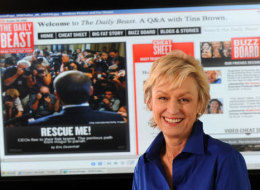
Newsweek sniffs out Daily Beast's Brown

There have been prominent WashPost and Newsweek links on the Daily Beast website since its launch two years ago, and now that the nation's number two news magazine, Newsweek, has changed hands for only a dollar to a deep-pockets owner willing to take on its debts, the redoubtable Ms Brown of the Daily Beast may soon up for double editorial duties and double exposure. She's always been more a features gal than a breaking news buff, so it will be fun to watch her later trajectory. The supposed rivalry between her and Arianna Huffington, the other aggregate cyber siren, has been satirized on Arianna's website.
Hat tip to Romenesko, via NY Times and WS Journal for the following story:

As speculation continues about a merger between The Daily Beast, the news and opinion Web site financed by Barry Diller, and Newsweek, The Wall Street Journal reports that the likelihood of a deal is increasing.

The Journal, citing people familiar with the discussions, said as part of the deal currently being discussed by the two companies, Tina Brown, The Daily Beast’s co-founder and co-owner, would become the editor of Newsweek, on top of her existing editorial duties at the Web site.

Speculation about a possible tie-up between the two companies resurfaced last week after Howard Kurtz, a three-decade veteran of The Washington Post, announced he was leaving to join The Daily Beast. Industry watchers suggested that Newsweek would provide a more logical home for Mr. Kurtz’s work given his long tenure as a print reporter.

However, the newspaper said that Sidney Harman, the audio equipment magnate who bought Newsweek in August, may be concerned about issues of control:

People familiar with Mr. Harman’s thinking said he may be wary of handing the reins to a strong-willed editor who also answers to another boss—Barry Diller, chairman and chief executive of Daily Beast owner IAC/InterActive Corp.

Newsweek, which Mr. Harman bought from The Washington Post Company for $1, lost almost $30 million last year amid circulation and advertising declines.

Meanwhile, The Daily Beast, which averages 4.6 million visitors a month, is expected to lose about $10 million this year, The Journal said, citing a person familiar with the matter.

However, The Daily Beast executives say the portal is on its way to becoming profitable in two years, according to the Journal.

Last week, in a piece marking The Daily Beast’s second anniversary, Ms. Brown responded to the buzz about a deal with Newsweek by saying: “Yes, there have been some interesting discussions going on, as we have with potential partners large and small all the time.”

Wednesday, August 11, 2010

Newsweek seeks new editor- no takers so far


Hat tip to Keith J. Kelly, The New York Post columnist who writes Media Ink

Pressure is mounting to find a new editor-in-chief of Newsweek, as the staff defections continue in the wake of the sale two weeks ago to stereo mogul Sidney Harman.

Jon Meacham, the current editor-in-chief, is telling staffers he hopes to pack it in by Labor Day.

And the short list of candidates to replace him is growing shorter by the day.

The most logical inside candidate, Fareed Zakaria, is said to have told Harman he is not interested in the job. Speculation is rampant that he may be the next big name to jump ship.

Walter Isaacson, current CEO of the Aspen Institute think tank, a former editor of Time and one-time head of CNN, is also showing no interest, despite his friendship with Harman, an Aspen Institute board member.

"I've already run a weekly magazine," Isaacson said. "I have no interest in it."

Some insiders have been actively pushing for Tina Brown, currently head of The Daily Beast Web site.

It's a long shot, but Newsweek CEO Tom Ascheim, who is staying on board as president under Harman, is said to be listening.

Newsweek Assistant Managing Editor Evan Thomas, book author and prolific writer of dozens of cover stories during his 24 years at the magazine, yesterday became the latest staffer to defect in what is becoming a serious brain drain.

Thomas, author most recently of "The War Lovers: Roosevelt, Lodge, Hearst, and the Rush to Empire, 1898," from Little, Brown earlier this year, is going to teach at Princeton and work on writing his next book for Little, a bio of President Dwight D. Eisenhower.

Said one insider of Brown: "She's the best magazine editor out there without a magazine and she'd bring a lot of attention to Newsweek."

Barry Diller, boss of IAC, which is bankrolling Brown and The Daily Beast, is on the board of the Washington Post Co., so he would be familiar with the pluses and minuses of the magazine. Wash Post said that in the first half of 2010 the magazine lost $8.5 million.

Diller could not be reached for comment.

And Brown, who has edited Tatler, Vanity Fair, The New Yorker, and the late Talk magazine, said she's not interested. "I very much admire Sidney Harman's willingness to take on a great news magazine that needs reinvention," she said. "But I've never been happier than in my partnership with Barry Diller creating The Daily Beast."


Read original here:

Tuesday, April 14, 2009

Condi mutates into sports reporter?


If the snarky comments are any indication, the former secretary of state Condi Rice has raised some hackles with her latest effort for Tina Brown's Daily Beast, particularly from leftists who have contempt for Meghan McCain's ramblings and little patience for Republicans in general. But actually, the odd golf article was rather above par, especially considering what a newcomer Rice is to the game. (Last summer she admitted to the WashPo how gripped she is by the National and with Tigerrrrr. Freelance hackdom is a pretty tight playing field, and one wonders if RIce has resorted to gratis citizen journalism.

Tuesday, January 6, 2009

Bush's Beastly Behaviour in bulletpoints


Don't miss these 20 forgotten disgraces of shrubya, as featured on the Daily Beast. Best thing the aggravating aggregate site has released so far.

Sex and Shoplifting

1) In March 2006, Claude Allen, Bush's top domestic policy aide, was arrested when he tried to return items he had shoplifted from Target for cash refunds. Allen, who made $161,000 a year, blamed stress from Hurricane Katrina.

2) In 2005, bloggers perked up their ears when a reporter named Jeff Gannon asked a softball question at a Bush press conference. Some sleuthing turned up nude photos of Gannon—whose real name was James Guckert—on male escort websites.

3) Randall Tobias, Bush’s AIDS Czar, mandated that organizations must oppose prostitution in order to receive American aid. It later emerged that Tobias purchased services through the notorious D.C. Madam, though Tobias maintained he only bought “massages.”

4) The Interior Department’s Minerals Management Service would not seem to be the sexiest government agency. But a departmental investigation last year found that officials had “frequently consumed alcohol at industry functions, had used cocaine and marijuana, and had sexual relationships with oil and gas company representatives.”

Where’d the Money Go?

5) When testifying before Congress in 2007, L. Paul Bremer, the former ambassador to Iraq, was unable to account for as much as $12 billion—about half of his budget—as the head of the Coalition Provisional Authority between May 2003 and June 2004. According to a report by Rep. Henry Waxman, contractors brought bags to meetings in order to collect shrink-wrapped bundles of money.

6) In 2004, Pentagon auditors found that Halliburton had not adequately accounted for $1.8 billion of the bill it sent to the United States government for its work in Iraq and Kuwait.

7) Also that year, Bunnatine Greenhouse, the Army Corp of Engineers' chief contracting officer, charged that KBR, a Halliburton subsidiary, unfairly received billions of dollars worth of no-bid contracts in Iraq. Greenhouse was demoted in 2005.

Disappearances

8) In 2002, Canadian citizen Maher Arar was detained at an airport in New York and spirited away to Syria where he was tortured and held for 10 months by his captors before being returned home. Canadian officials investigated Arar's case, declared he was innocent, and paid him $9 million in compensation. American officials refused to admit the mistake and instead kept Arar on a terrorist watch list.

9) Army Captain James Yee, a Muslim chaplain in Guantanamo Bay, was hooded, shackled, and detained in solitary confinement for 76 days on charges of espionage. Within a year the case against Yee had collapsed and the Army tried to save face by charging him with hoarding pornography.

All the President’s Wordsmiths

10) In an e-mail to friends, Danielle Crittenden, the wife of White House speechwriter David Frum, bragged that her husband had written Bush’s famous “Axis of Evil” line. The e-mail leaked to Slate.com, causing a minor scandal.

11) Part of the self-created mythology of White House speechwriter Michael Gerson was that he composed his speeches in longhand. But as fellow scribe Matthew Scully later noted: “At the precise moment when the State of the Union address was being drafted at the White House by John [McConnell] and me, Mike was off pretending to craft the State of the Union in longhand for the benefit of a reporter.”

12) First, there was Columnist Gate: In 2005, USA Today reported that conservative commentator Armstrong Williams received a $240,000 contract from the Department of Education to promote No Child Left Behind on his television show and to sell other African American journalists on the legislation. Later, The Washington Post uncovered a similar deal with columnist Maggie Gallagher to promote a marriage initiative for the Department of Health.

13) A Defense Department report in 2006 urged the military to end its practice of paying Iraqi journalists to publish pro-American stories in their newspapers, arguing the tactic would "undermine the concept of a free press."

14) According to The New York Times, Karl Rove scored lobbyist Ralph Reed in a lucrative contract with Enron in 1997 to gain his support in the 2000 presidential race.

15) David Safavian, the former chief of staff of the General Services Administration, was convicted of helping Jack Abramoff on a shady land deal as well as concealing a "lavish weeklong golf trip" paid for by Abramoff.

16) As head of the World Bank, Paul Wolfowitz was forced to resign in disgrace after he helped his "female companion," Shaha Riza, score a $60,000 pay raise and promotion—and then tried to cover it up.

Down the Memory Hole

17) Bush fundraiser Lurita Doan's gig as chair of the General Services Administration went down in flames when she was accused of asking agency staff to help Republican candidates win elections. Doan denied any wrongdoing. When witnesses said she asked her staff at a meeting "How can we use GSA to help our candidates in the next election?" Doan claimed she had no memory of the presentation.

18) Though Army microbiologist Bruce Ivins, who committed suicide in 2008, was suspected of being the anthrax mailer, that didn't keep Bush and Cheney from openly speculating that Al Qaeda was behind the attacks and even going so far as to pressure FBI officials to come up with a Bin Laden connection, according to the New York Daily News.

Mission Accomplished

19) In 2003, Bush went to a warehouse in St. Louis to give a speech entitled “Strengthening America’s Economy.” But the boxes laid out before the presidential podium bore the label "Made in China." The labels were then obscured with white paper. The White House blamed an "overzealous advance volunteer.”

The Last Word

20) The administration ethos was nicely summarized during the attorney-general scandal investigation in a testy exchange between former White House Political Director Sara Taylor and Sen. Patrick Leahy. Taylor: "I took an oath to the president. … And I believe that taking that oath means that I need to respect, and do respect, my service to the President." Leahy: "No, the oath says that you take an oath to uphold and protect the Constitution of the United States. That is your paramount duty. I know that the President refers to the government being his government—it's not."